
To Go See a Tree
You don’t need much of an excuse, but this is a good one.

There’s an old friend that I visit often these days.
It’s a short but pleasant walk to get there. Downhill, past my friendly and warm high street in Earlsdon, back up along a narrow pavement made tunnel-like by encroaching tree-roots, rising up and through asphalt and concrete alike. Then, at the top, right into a wooded copse, past a tree that has been coerced into a makeshift wigwam, roots extending conically to accommodate just the right-sized small human (or dog). Across another road, into yet another wood that opens wide, dipping in the clearing to form a riot of mountain-bike trails that are frequently punctuated by the happy-terrified calls of the local yoof.


After these woods, I am but a quiet street away from the end, where my friend and I sit in cozy, comfortable silence in the fug of the August afternoon heat. Not much gets spoken, not really. Maybe I’d have remembered to bring some tea, maybe buy an ice-cream on the way, but I’d always have my book and sit through a few chapters of blissful peace. Maybe I’ll check on my friend’s old burn-scars, and comment blithely on the state of their hard, weathered skin.
I’m never sure why I know when to leave - maybe the goldcrests have stopped flitting around, or maybe the sunlight doesn’t filter through quite so - but when I’m ready, I put my cup and book away, sling my bag onto my back and clamber back down the oak tree and home through the woods.
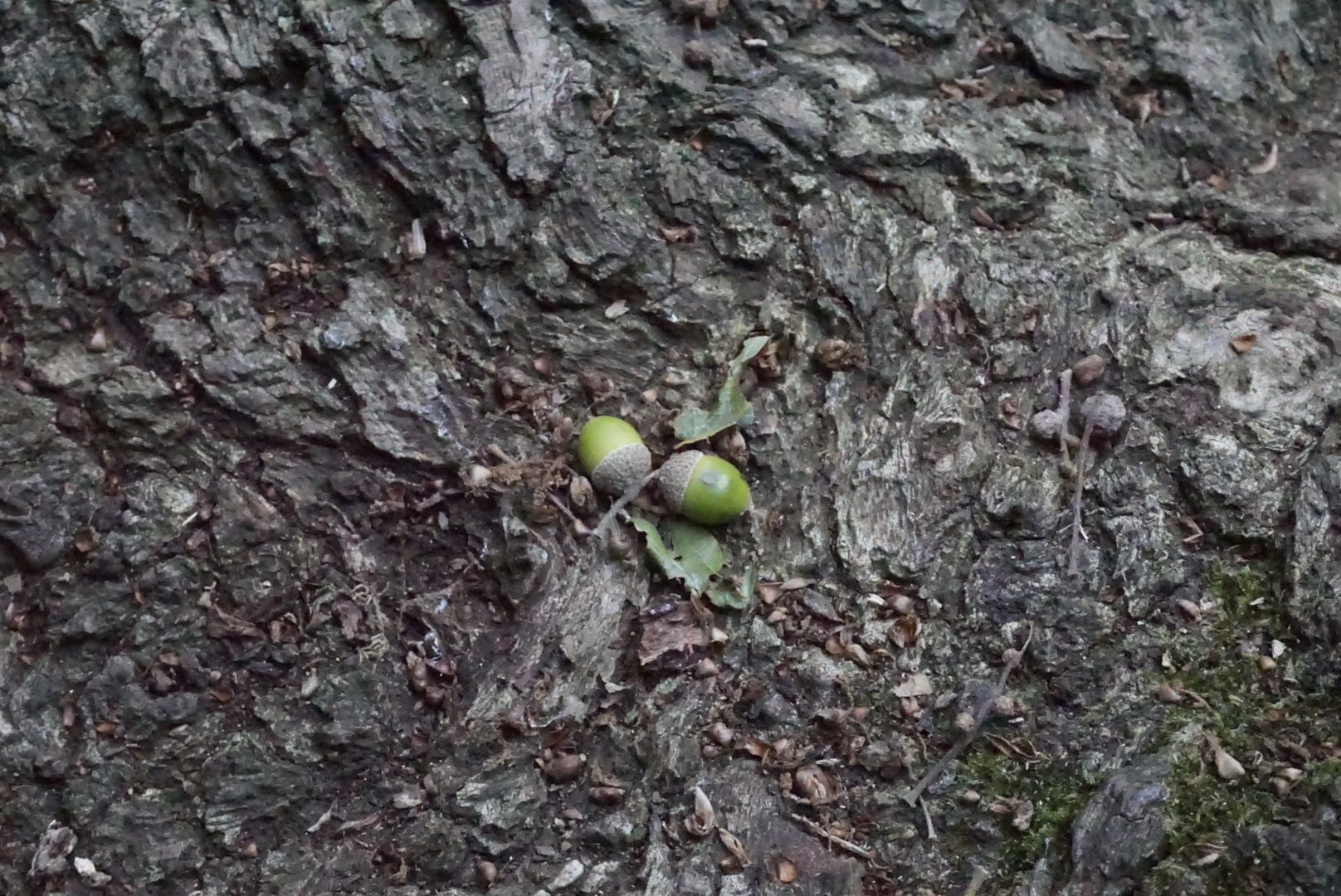
In prose, personifying trees works out just fine. Tolkien can speak openly about the ents, and the entwives who were lost and cannot be found.1 Pratchett’s trees are deeply religious, believing in leading an upstanding life (one of his many puns) in order for a righteous afterlife, and seeing the death and growth of centuries enacted in a blink, humans barely registering as a blur in their consciousness.2 In practice, you’d get strange looks. Trees are pretty taciturn beings. To befriend or visit a tree is to have, on the face of it, a pretty one-way conversation.
Or is it? Even if silent, it’s undeniable that trees have presence. I don’t know my trees anything as well as I should, but the gnarly bulk of an oak, the soft tickle of willow-fronds and the robust, solid trunk of a beech are as distinct as faces in a brand-new classroom. When I took my friend Adam out to these woods recently, we sat on a dead trunk and he noted every branch, every twisted tree-root and the pitch of each canopy in the wind. Silent, but talkative.
As ever, Robin Wall Kimmerer has the decisive stance on this subject. Plants, trees, she says, speak through their silent exchange of gifts and values. Just as we tend them, fertilise them, pull out rocks or tend to weeds, they give us back in kind. In her words:
Something essential happens in a vegetable garden. It’s a place where if you can’t say “I love you” out loud, you can say it in seeds. And the land will reciprocate, in beans.3
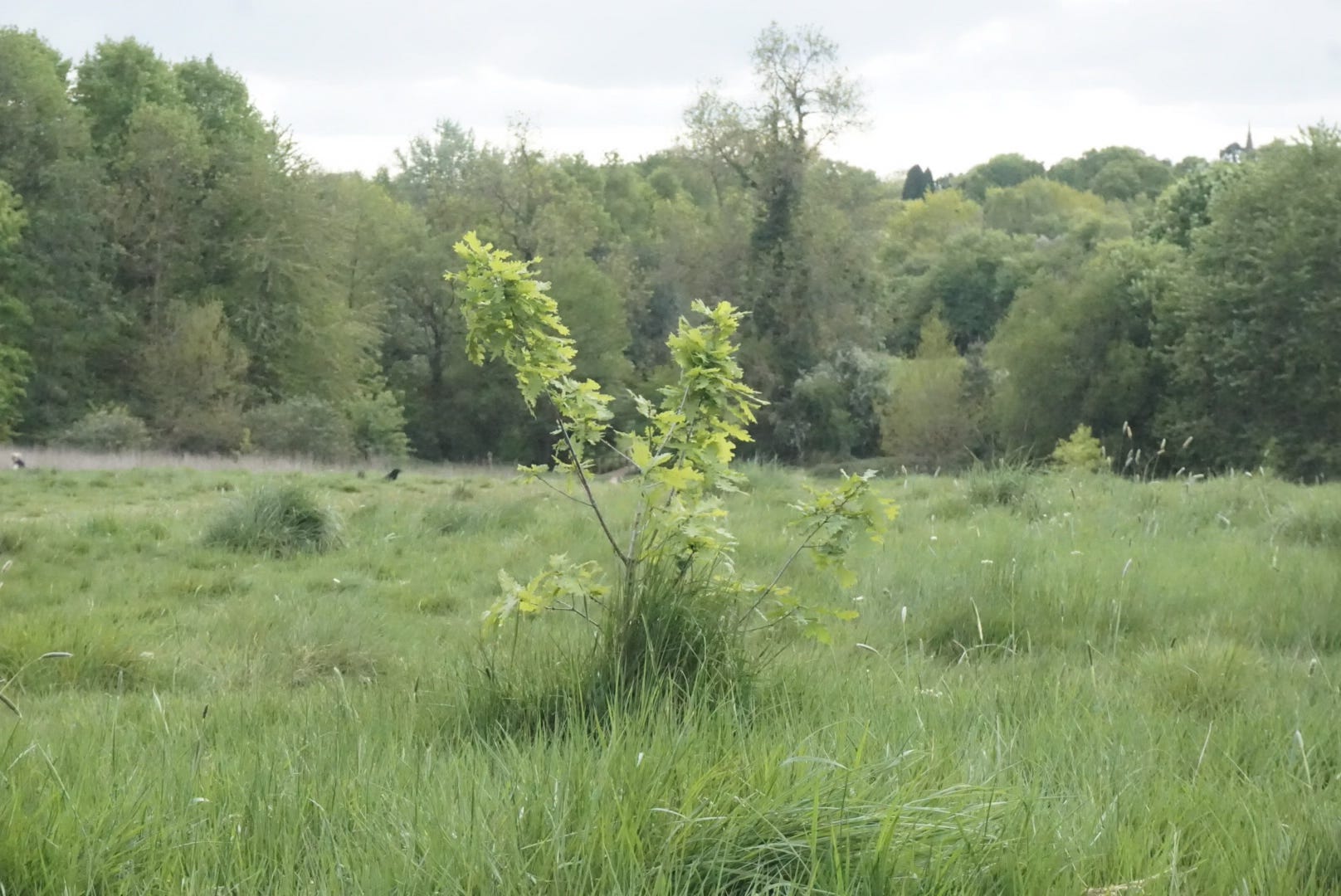
Now, I can’t claim to have tended this tree or any tree, but someone did; I’m merely continuing the cycle. Just as we might visit an aged relative, giving nothing but the gift of company and camaraderie, so do I visit trees. It seems that a lot of my walks end at a tree. Before I left my old house, my favourite walk uphill led to a bench on a gentle grassy hill-top, under an oak, another oak. I would sit there, tired but invigorated, nestling a hot tea against the mounting chill and allowing my old friend the tree to break the flow of the wind, as it’s done for so many centuries.
On some weekends, I would go even further, across a busy carriageway and climbing up quiet backlanes to another sheltered green where resided many stages of tree: rows of saplings, green and slender, sheltered behind green wire-mesh fencing; a majestic old tree, it’s arms wide and embracing, resting on its prized throne in the middle of the field; and a felled tree, its trunk bearing chainsaw scars and fungal blooms alike.


As an aside, I don’t know quite why so many of my friendly trees are oaks. A friend recently introduced me to The Woodland Trust’s Ancient Tree inventory, which has oodles of volunteer-documented arboreal knowledge housed within a handy interactive map. There are numbers of notable, veteran or ancient trees4 near me, but the ones I happen to rest under are always oak. Maybe it’s cognitive bias from my limited knowledge of trees. Maybe it’s because oaks, those popular celebrities, enjoy disproportionate protection and conservation compared to others that have been felled over the years. Maybe it’s because they offer the best shelter. Most likely, it’s a combination of all three.
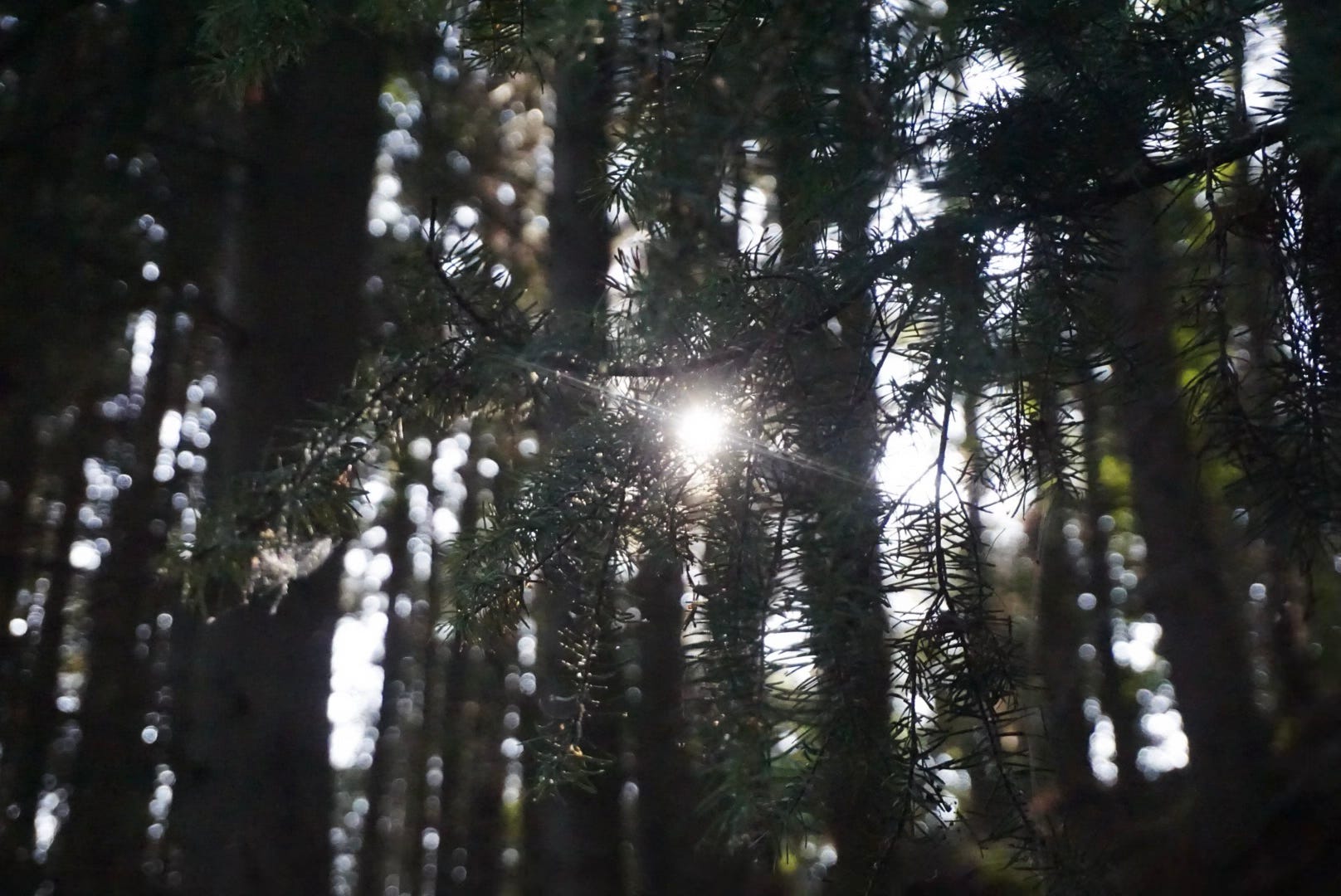
My most recent trip to visit a tree was a long one; three days long, in fact. Last year, I walked part of a route over the Shropshire hills with my brother, and since then I’ve craved to return. The route I planned followed the Shropshire Way from Shrewsbury, ending in Ratlinghope to camp for the first night, then over the top of Long Mynd over to All Stretton bunkhouse for the second, and then over Caer Caradoc enroute home for the third. When planning the route, a little snippet on Komoot caught my eye:

That was decided. On day two, I would extend my walk to go visit that tree.
I’ll talk in full about my walk separately, but it was wonderful and felt essential. I chose to eschew Komoot in the end in favour of two Ordnance Survey maps, one for Shrewsbury and one Long Mynd, Wenlock Edge and the surrounding hills. Navigating by map and compass has always been a wonderful way of reconnecting with the landscape, and over the three days I felt every sun-soaked path, dappled woodland and grassy hilltop as deeply as if I were navigating on my hands and knees.


After an excellent first night’s rest, my aching ankles were ready to tackle the climb up Long Mynd. After a brookside track, quiet roads and a harsh but dramatic rocky path, I crested the top to the Jack Mytton way and turned off towards the little valley where I estimated the tree stood. Many wooded figures led me astray as they emerged over the brow. Was it that one? No, that’s a shrub. That one? No, it’s the wrong way. Finally, the right three emerged. It stood just overlooking the valley towards Little Stretton, a little grassy circle and several piles of dung around it indicating where sheep of years had rested and grazed.
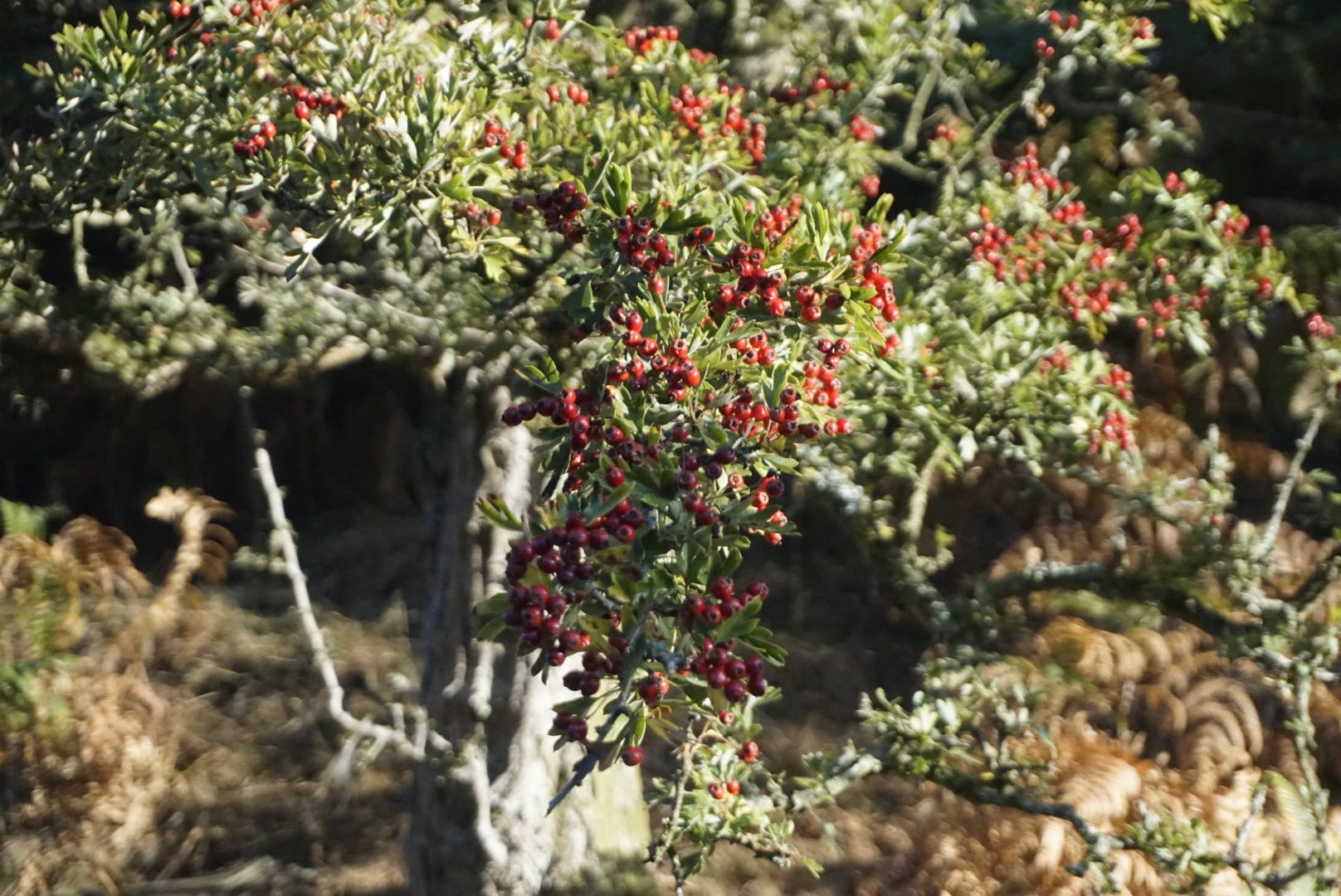
I can’t have spent too long under the tree. I looked at it enough to surmise it was a rowan, with bright red berries and a twisted frame rising just high enough to sit under. After a snack, a brief sit down and stumbling into the brush for pee, I hauled my pack back on and set off back uphill, glancing only to take a photograph.
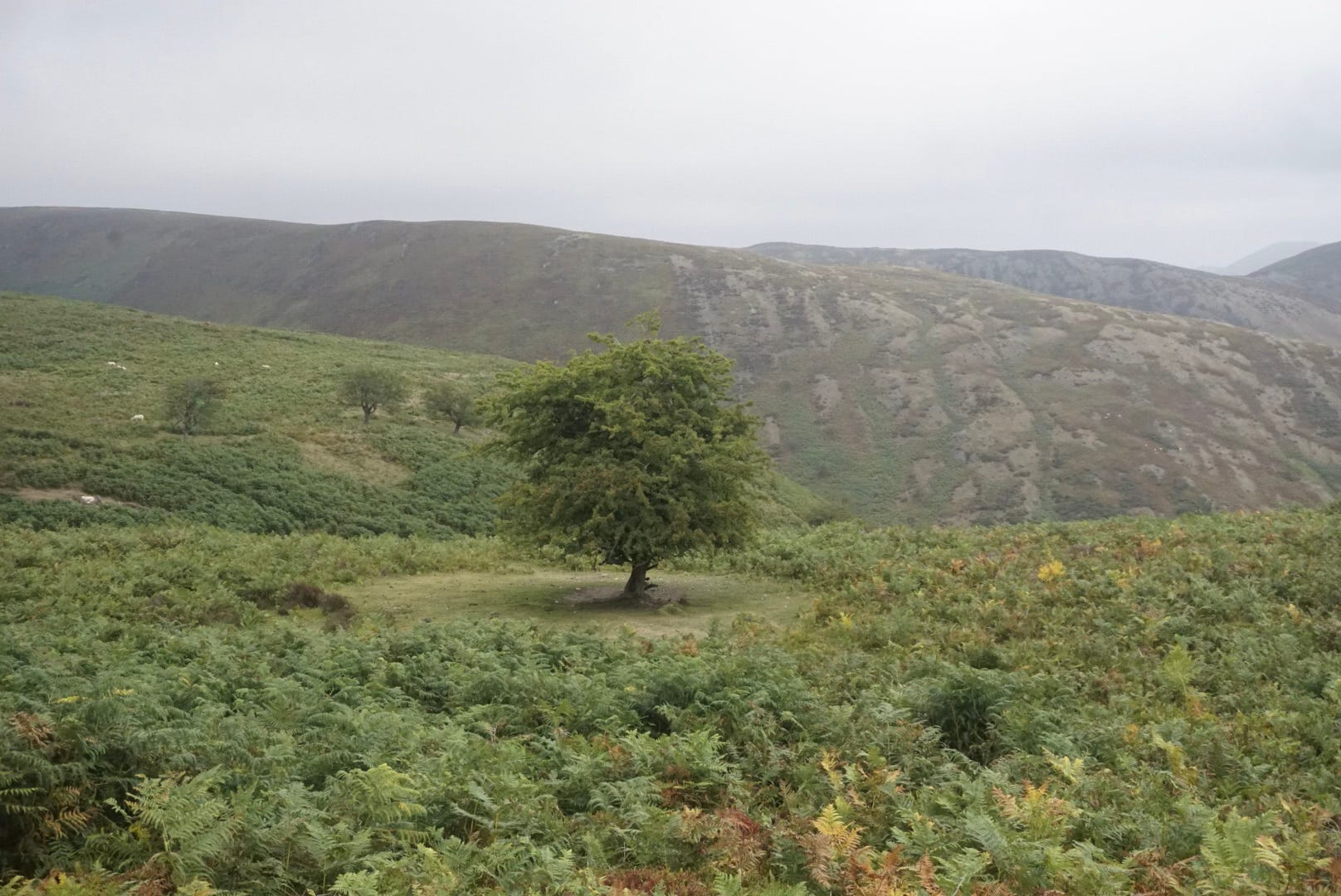
My tree friend back in Earlsdon doesn’t as much as say a word. The trees I’ve climbed, sat under or had my afternoon snacks with are mute, silent, immovable companions. This tree in the Shropshire hills didn’t really give me much, not more than an extra few kms on the walk and a brief moment of respite.
What is a tree, though? Is it an entity of bark, branch, bramble and bushy top, growing slower than we can fathom and persisting as long as a human family tree? Or is it the experience of climbing, sitting, embracing and smelling, of listening to birds and feeling the mark of centuries through the warm, knobbly bark?
All I can say is, if we accept that a tree is NOT just a tree, we’d go visit them all the time, too.
Loved this, Varun. I'm glad you had an excellent trip!
Adam is a good person to spend time amongst the trees with, he's very knowledgeable and quite good at identifying a lot of them. He's taught me a lot!
Robin Wall Kimmerer is also a 5-star person to spend any time with, especially outdoors. Braiding Sweetgrass is one of my favourite nonfiction books of all time. Have you read Gathering Moss? If not, I highly recommend it.
She's also on an episode of Ologies (moss) and her voice is so soothing, it's a wonderful listen.
"Just as we might visit an aged relative, giving nothing but the gift of company and camaraderie, so do I visit trees" - getting strong Nan Shepherd vibes from this! She said something about visiting the Cairngorms like you visit an old friend, just to be in each others' company.
Finally, a quick potential correction, if you'll permit me: if that last photo is of the lone tree in question, it's not a rowan. Looks more like a hawthorn to me :)
Oak trees are fabulous - there is just something about the unique squiggly pattern of the bark and the way the branches grow, and the deep deep green of their leaves. I'm incredibly lucky to live close to some beautiful long oak avenues, it's not called Cheshire oaks for no reason - a haven of calm next to the crazy consumerism shopping outlet.