
On Belonging
Why 24 multiple-choice questions can't dictate where I roam.

What is a fundamental rule of British life?
A. Maintaining an allotment
B. Queuing up
C. The rule of law
D. Supporting your local team
Fuck. Isn’t it all of these at once?
This feels like an unwinnable challenge. The title above my webpage reads ‘Life in the UK Test 14’ and, clearly, I’m not cut out for it. Why, just this morning I looked out the window and didn’t comment drily about the weather. Earlier this week, I spoke to someone on the train across from me. Several times in 2026 alone, I have not taken the bins out on the correct day, been nice to drivers on the road and placed items marked ‘recyclable’ in the general waste bin.
At this stage, I might as well walk up to the home office and demand to get deported to save them the trouble.
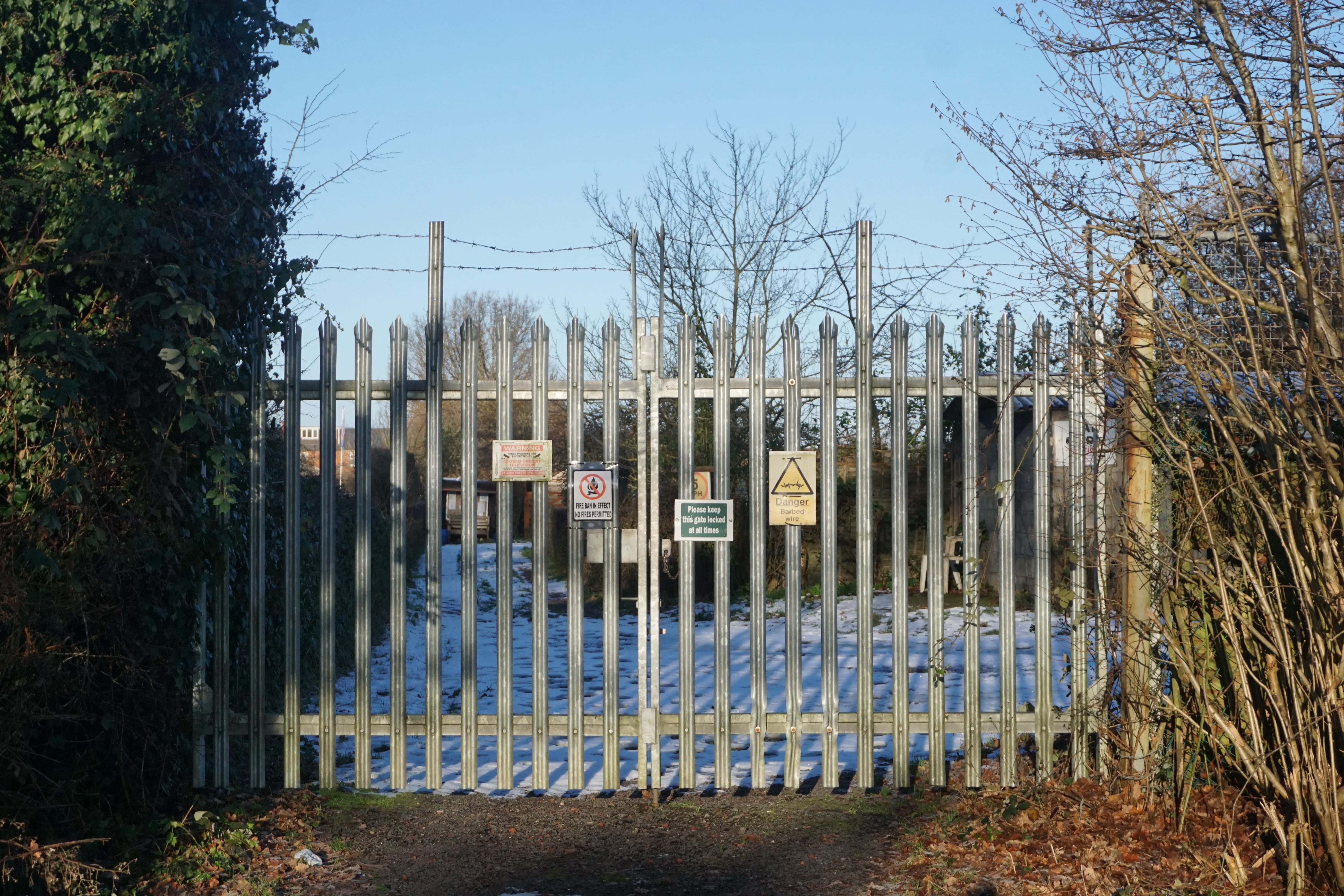
This all started late last year, when political parties began to announce their ambitions for the 2026 council elections and manifestos for the general election three years hence. If you haven’t been keeping up, the populist, racist, islamophobic, xenophobic and anti-immigrant Reform party did pretty well off it. They were leading popular polls by a reasonable margin, and even the Conservatives were left in their wake.1
If the threat of a possible Reform-led government (and the havoc it would bring in its wake) wasn’t enough, they also announced some of their big plans around immigration. Now, I and thousands of other immigrants with strong roots in the UK possess what is called ‘settled’ status, or Indefinite Leave to Remain, an oxymoron which nevertheless implies some semblance of permanence. I don’t want to leave here anytime soon; the tea’s nice and the Lake District exists. But no, Reform stated they would like to make that Indefinite Leave…well, definite. Amongst other hare-brainednesses included a five-year renewal period, wherein immigrants would have to leave the country every five years to renew their visas.2 The true tragedy of all this is that some people actually think it’s a good idea.
The idea of immigrants having to ‘prove’ their right to belong is, arguably, as contentious as that of anyone belonging anywhere in the first place. I find this especially glaring in the blatant xenophobia exhibited by administrators in our government who are themselves of Asian, African or other minority ethnic origin. What separates me, genealogically speaking, from Priti Patel or Suella Braverman? Why, cut me and I shall bleed as Indian as they ever could be. Yet, outwardly, I sound like they do and call my friends ‘mate’ and order a pint of bitter unironically at the pub - which, considering they probably have no friends and don’t like to have fun, is more than they would ever do.
What makes them belong, and not me?
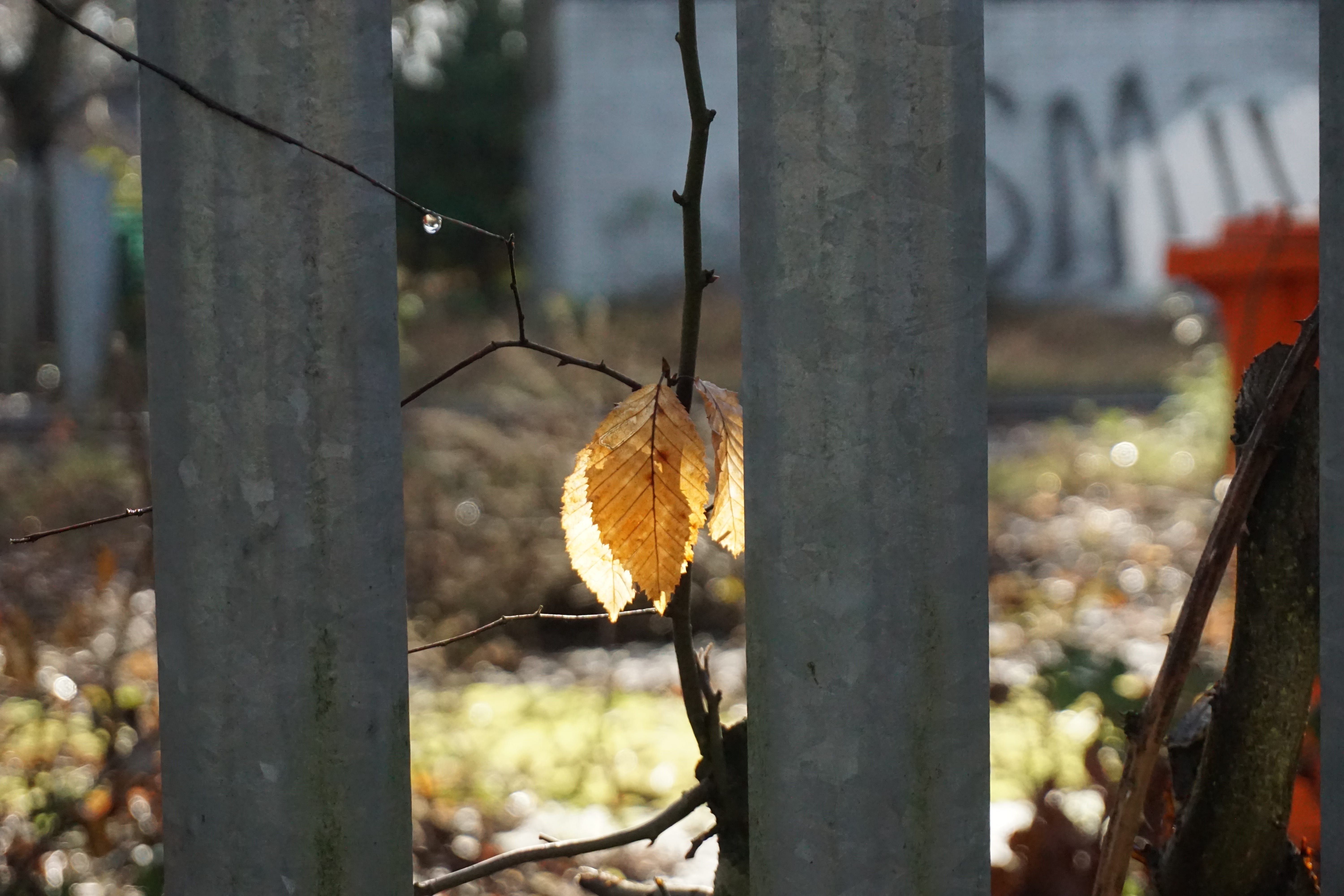
Well, evidently, a technicality. Which is where the Test comes in. That, £1,735 of my hard-earned money and an ‘up to six month’ wait are all that stands between me and citizenship to the United Kingdom of Great Britain and Ireland. I don’t get a passport, though; apparently that’s extra.
What further perplexes and frustrates me, especially as an educator, is the perception that something as esoteric, contentious and fluid as the sense of belonging, residency and nationhood can be quantified at all. I was an art teacher for a short period and I ardently disliked it - because I didn’t feel that art could be assessed fairly. There was no way of placing a quantifiable outcome to an artwork without introducing the subjective view of an examiner. Similarly, I feel that this particular definition of UK citizenship is flavoured by subjective bias. The questions are all borrowed from a history book written too long ago, and with far too much trivia and far too little basis in daily life.
At least I do know that the first curry house in Britain, the Hindoostane Coffee House, was opened in London in 1810 by Sake Dean Mohamed.3 So it’s not all bad.
Anyway, this revision has really got me down. The idea that formal proof of my belonging lay on the other end of it only served to deepen my negativity. Had I not proven the very same thing time, time and time again, in the actions I took? The habits I had grown? The people I affected and the lives I lived?
All this, in the lap of the place that I loved?
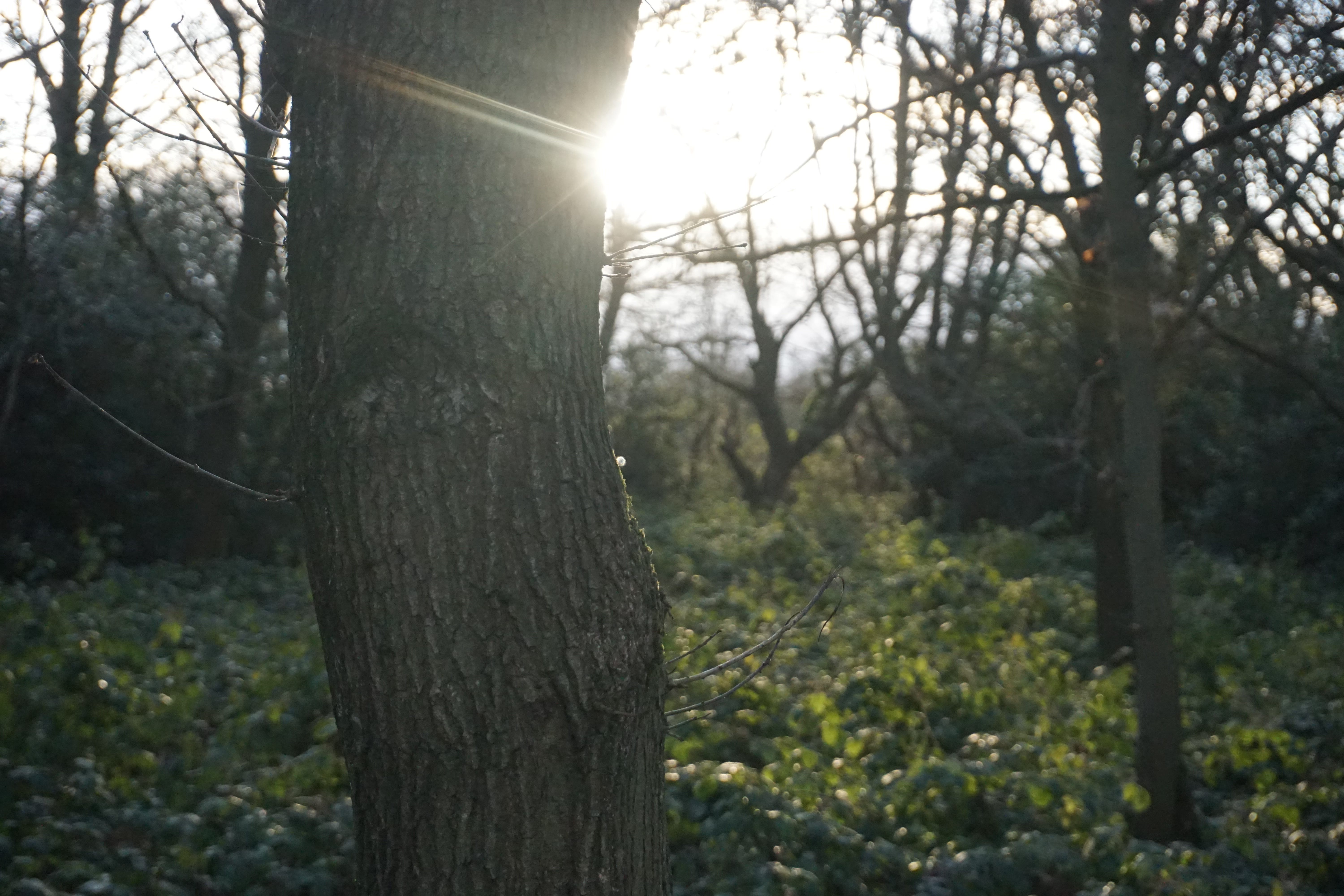
A gentle wink of sunlight had edged into the corners of my consciousness; the very peak of gentle late afternoon light. Shutting my laptop and my revision with a grimace, I grabbed my boots, a flaskful of hot water, a tea bag and a pack of choccy digestives, shook the encrusted mud off them all and headed out the door into the sharp chill.
The last few weeks of January had been their most polarising, extreme and oppressing. Heading on this final stretch towards the fabled Blue Monday, it seemed like the entire world was compressing and contorting our moods into a pointy, angular depression. And so I weaponised it. Why subject myself to misery when I could channel it into activity? And what beautiful activity it was, today. The sky was clearing, but hints of the previous week’s ice and snow clung to its outskirts, and the outskirts of the path that I crunched and squelched along. Besides me, the road hummed and rumbled with activity but the trees provided just enough shelter for me to continue, unnoticed and serene, along the muddy path.
There were a few people out on this unlikely lush evening. A man on crutches, sprawled on the bench but lobbing a ball over and over for his excited bulldog; a couple meandering along, gently supporting one another over the puddles and ice-traps; just one yoof on his bike, stop-start-stop-start weaving his way over the trail. I waved to them all, and said hello to most.



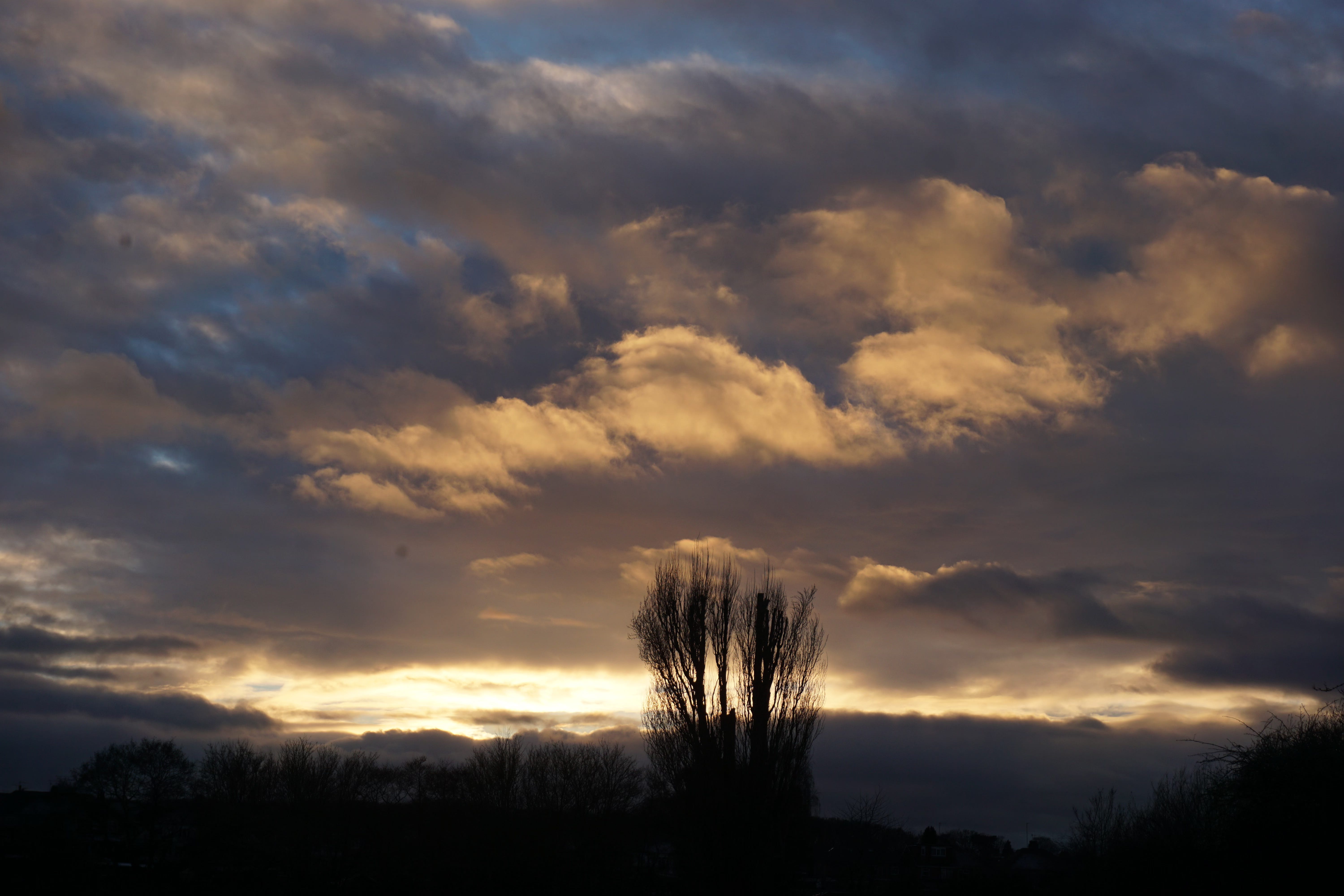
Pure memory and movement brought me out the other end to the trail-head and across the meadow to my local lake. Overhanging branches framed the path through to the lake; I brushed them aside gently, and a spare few drops of water sprayed gently across my back as they swung back down. Over the treetops, the sun had made its final dip below the horizon but left a trail of blazing fire, clouds illuminated in rich hues of gold and grey. It was an arrestingly beautiful sight. The lake reflected it back at me from the netherworld.
I squelched up the path, across a gorgeously half-frozen lakeside and past some intertwined shrubbery until I found it; my preferred bench. It’s only a little trestle balanced delicately on two wooden uprights, nestled in a little glade beside the brimbling River Sherbourne. In this season, the river was heavy and swollen, and the bench, normally surrounded by overgrown shrubs and gentle grass, was mired in a sea of half-frozen mud. I crunched and squelched to it, sat down, made myself some tea and cupped it gratefully in chilly fingers.
Around me, the evening curled into an embrace. In the distance, I spotted small parties of dogs and their walkers traipsing along the lake. The sun said its final farewell in an inky purply-blue sky. Wisps of steam drifted up from my mug and melded into the cloud.
I was warm, content, alive; every bit part of this landscape.
If this isn’t belonging, then there ain’t a test that’s going to prove it.
Hey Varun, I loved reading this, I’m so glad I stumbled across it. You write with such humour!! And I love your description of Britishness… whatever that really means! Looking forward to reading more of your stuff :)